Weekend Editorial ·
A bond rout that trusts the Fed
The 2-year Treasury yield rose 30bp on a hot CPI, but we think it priced a firmer Fed while inflation pricing barely moved.
Treasuries had a hard week. It began on Tuesday with the October consumer price index, which showed prices up 0.4% in a month against the 0.3% economists expected, and core prices, which leave out food and energy, up 0.3%. In the same week the Federal Reserve said it would hold fewer policy meetings next year. By Friday the 2-year Treasury yield was 30bp higher on the week and the 10-year 28bp higher, back above 5%, and markets that had seen a December hike by the Fed as likely now priced it as certain. Stocks took it calmly, and the S&P 500 rose 2.5% over the week.
Most people saw an inflation scare
Most commentary read the selling as inflation fear, and it is easy to see why. Prices have beaten forecasts for three months running, Thursday's auction of 30-year bonds met soft demand and sold at a yield of 5.441%, and the statisticians could not even publish an annual inflation rate, because last year's government shutdown left no comparable October 2025 figure. On that telling, bond investors looked at stubborn prices and a government that keeps borrowing, and asked to be paid more. But the bond market's own prices show investors raising their expectations for Fed rates while leaving their price for future inflation almost unchanged, and the Fed's own announcement did much of that work.
Inflation compensation barely moved
A Treasury yield has two parts. One is the real yield, what an investor earns after inflation. The other is inflation compensation, the gap between an ordinary Treasury yield and an inflation-protected one, which is the average inflation rate bond investors are pricing. Fear of inflation would show up in the second part, and over five years it ended the week only 2bp higher while the 2-year yield jumped.
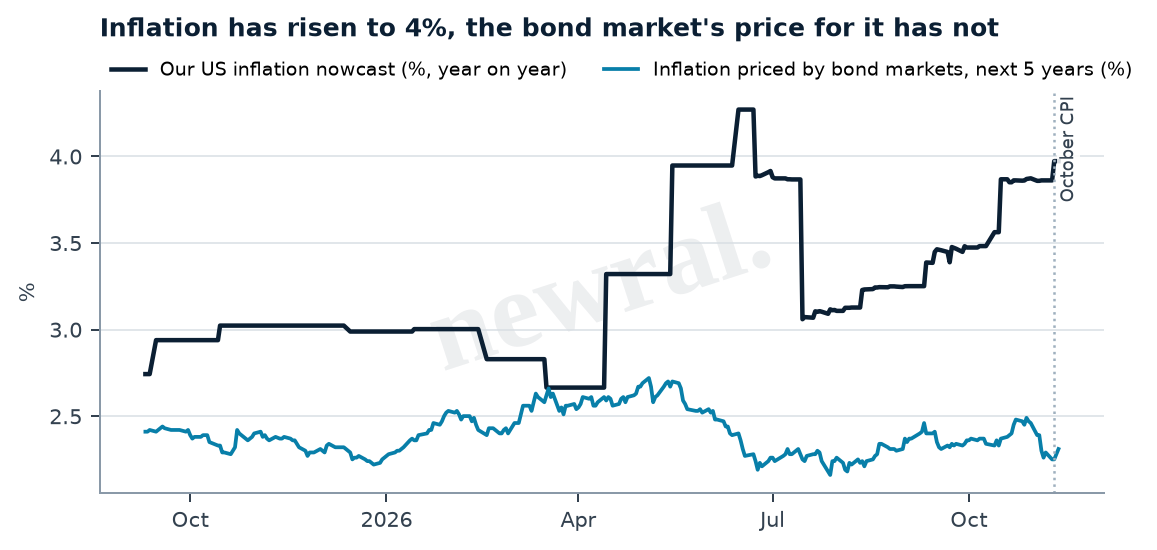
Since September last year our nowcast of US inflation, our estimate of the annual rate ahead of the official data, has risen from 2.7% to 4.0%, while the inflation bond markets price for the next five years has slipped from 2.41% to 2.31%. Our 31 October piece argued that the year's rise in long-term borrowing costs had been almost entirely real, and even a hot inflation report has not changed that.
The move was a bet on the Fed
What moved was the path of rates markets expect from the Fed. The further tightening they price rose from 45bp to 77bp over the week, while inflation compensation barely changed. We think the plan to meet less often next year added to this, because fewer meetings give the Fed fewer chances to change course, and when the next move is expected to be a hike, investors price more of it sooner rather than wait. Since September last year the swing is much larger, from about 70bp of cuts priced to the hikes priced today, and five-year inflation pricing has ended a little lower.
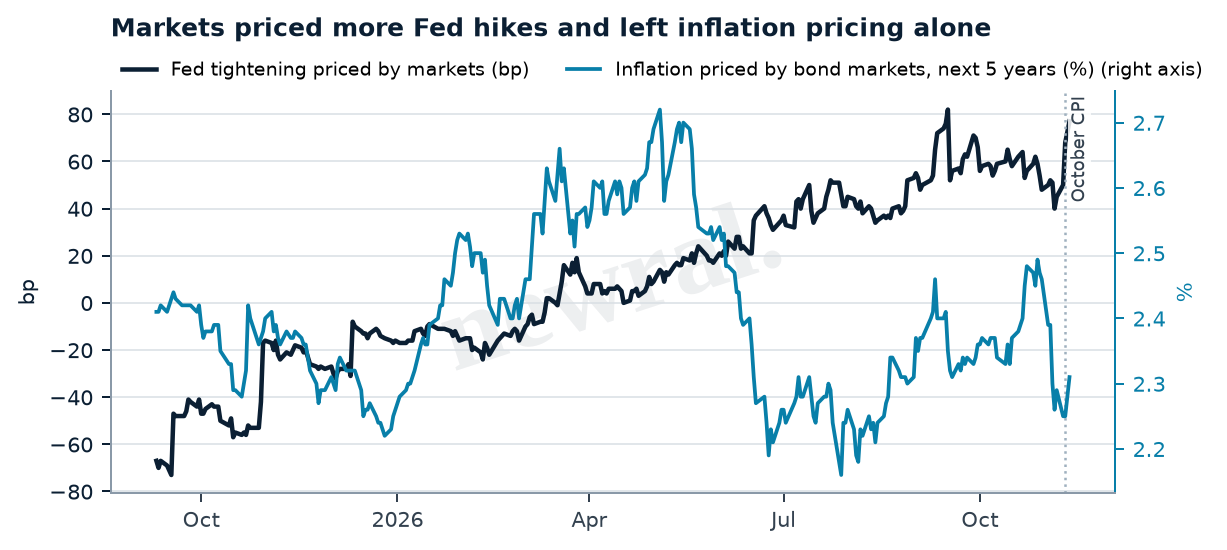
The two lines have not always moved apart. Between July and September both rose, and in early November both fell as oil slid. What the chart does show is that the bond market has absorbed a large shift towards tighter Fed policy without raising its price for future inflation. Gold, which people tend to buy when they doubt central banks, fell almost 5% this week, and the dollar index rose 1.1%.
The strongest objection has two parts. Oil may be doing the work in inflation compensation, and soft auctions suggest buyers are stepping back from long-dated debt. Oil did drive the early-November drop, but this week Brent fell only 1.7% and inflation compensation rose slightly, so oil cannot account for the calm through the CPI week. On the auctions, the curve has flattened only modestly since late October, but the 2-year yield, the one most tied to the Fed, led the selling and rose slightly more than the 10-year. A buyers' strike at the long end would have shown up first in long yields running ahead of short ones, and this week they did not.
What the bond market has staked
None of this means the bond market is wrong, and our own forecast for inflation over the coming year sits close to what markets price. What surprised us is how little extra the bond market asks for the chance that the Fed falls short. With our estimate of inflation near 4%, investors accept an inflation price of about 2.3% a year for five years, which assumes the Fed brings inflation down soon and keeps it there.
Two things over the next month will show whether that assumption holds. The next reading of the Fed's preferred inflation measure will show whether core prices are still rising at the pace of recent months, and the December meeting will show how the Fed explains the hike markets have fully priced. We will be listening for whether the Fed sounds confident that inflation will come down on its own timetable. If core prices keep that pace into the new year, investors would have to raise the inflation rate they price for the next five years, which would push long-term yields up through the part that has so far stayed still. We are not sure that happens, and our own forecast suggests it may not.
Newral content presents model-derived estimates for research and information purposes only and is not investment advice or a recommendation to buy or sell any security or instrument.
Newral's research is built on its own economic and market models. Software tools, including AI, support parts of the production process. Every piece is reviewed and approved by Newral before publication, and Newral AG is responsible for its content.
Get the Weekend Editorial every Saturday
One idea from our models each weekend, free.
Request a sample note