Weekend Editorial ·
The crowd has already left the room
Trend followers sit at 98% of their maximum short in 10-year Treasuries, with little left to sell and a lot to buy back.
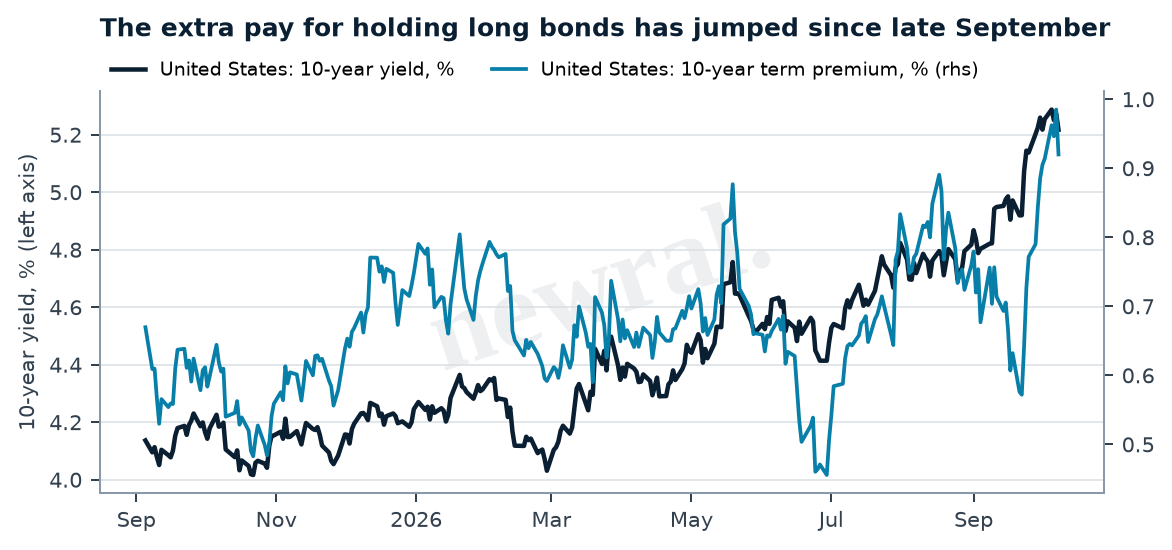
The 10-year Treasury yield has climbed 39bp in a month to 5.22%, and the popular explanation is a new regime of deficits and heavy borrowing. Much of September's selling came from rule-based trend followers, who are now as short as their rules allow. A sharp bond rally would force them to buy back about six times as much as an equally sharp sell-off would make them sell.
Deficits are old news
The case for structurally higher yields is easy to make: a federal deficit of about 6% of GDP, and a government competing for savers' money with technology companies borrowing heavily to build data centres. Little of that changed in the past four weeks, and the part of the market that tracks the Fed most closely has barely moved: the 2-year yield is only 3bp higher than at the September meeting. Meanwhile the economy is cooling. September payrolls rose just 29,000 against 84,000 expected.
Investors want more to lend for longer
A bond yield has two parts: what investors expect short-term rates to average over the bond's life, and the term premium, the extra yield they demand for locking money up for ten years, much as a landlord charges more for a long lease in an uncertain market.
Our estimate of the 10-year term premium rose 22bp over the past month, to 0.92%. That is 55% of the rise in the 10-year yield. The rest reflects where investors expect short-term rates to sit over the coming years. Inflation fears played little part. One large asset manager estimated that only 1bp of the month's rise came from higher inflation expectations, and our nowcast of September inflation, built from data already available, puts the core rate, which strips out food and energy, at 2.5%.
Trend followers have nothing left to sell
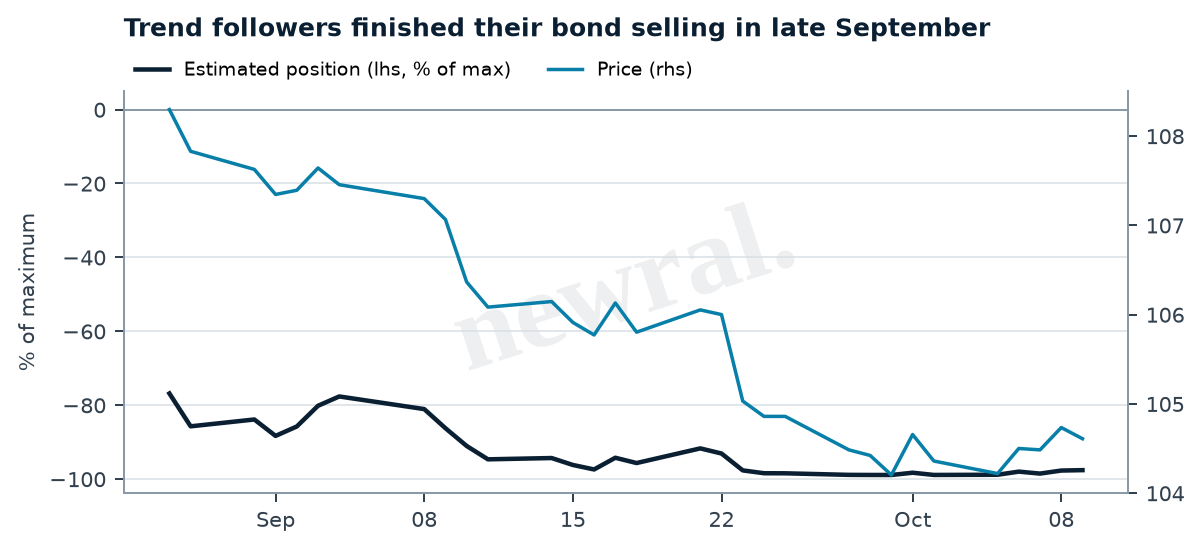
Trend followers, often called CTAs, are funds that buy what has been rising and sell what has been falling, according to fixed rules. When bond prices fall steadily, their models tell them to sell more, and that selling pushes prices down further.
That loop ran hard from late August. Between 27 August and 24 September, our model of their positioning shows the 10-year Treasury short deepening from 77% of the maximum to 98%. Across the six Treasury futures contracts we track, they now hold no longs at all. Since then the position has been flat, because there is no room left for it to grow.
A rally would force them to buy
If 10-year prices fall by two standard deviations over the next two weeks, an unusually large move of the kind seen roughly one fortnight in twenty, our model expects trend followers to add only about 2 points to their short. If prices rise by the same amount, they would buy back about 12 points.
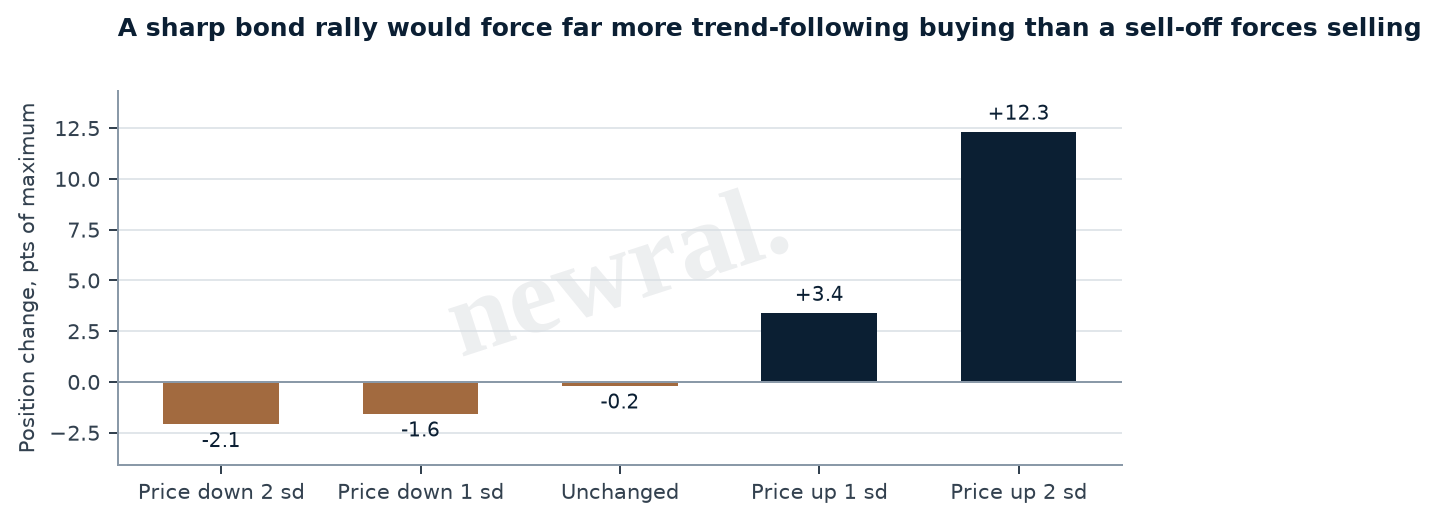
Think of a crowd that has already left the room. A second fire alarm changes little, but an all-clear brings everyone back through the same door at once. A bad inflation report would find little forced selling left to add. A soft one would make trend followers buy back what they sold, and could make a rally larger than the data alone justify.
The best case against us
The strongest objection comes from our own data. Our estimate of the term premium has risen 35bp since its low on 22 September, more than half of it after trend followers reached their limit. Investors selling for fundamental reasons, worried about deficits, supply and inflation, are setting the level now, and they can keep pushing for months.
We agree. Our argument does not depend on who sets the level. If those sellers keep going, trend followers add almost nothing to the move. If they pause, trend followers have a great deal to buy back.
We would be wrong if energy prices feed into core inflation and the Fed signals more hikes. That would show up first in the 2-year yield, which has so far stayed out of the sell-off. The first test is the September CPI report on 14 October, the last before the Fed meets on 28 October.
Newral content presents model-derived estimates for research and information purposes only and is not investment advice or a recommendation to buy or sell any security or instrument.
Newral's research is built on its own economic and market models. Software tools, including AI, support parts of the production process. Every piece is reviewed and approved by Newral before publication, and Newral AG is responsible for its content.
Get the Weekend Editorial every Saturday
One idea from our models each weekend, free.
Request a sample note